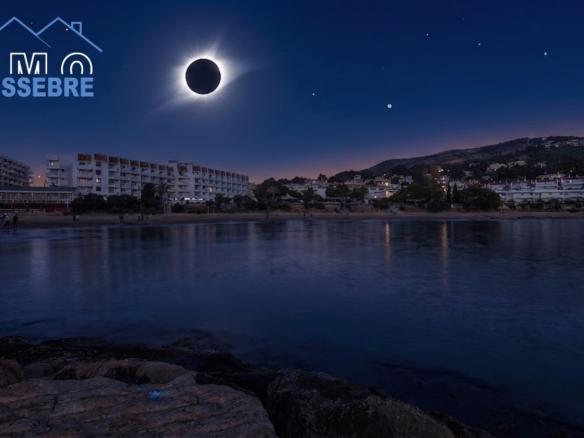
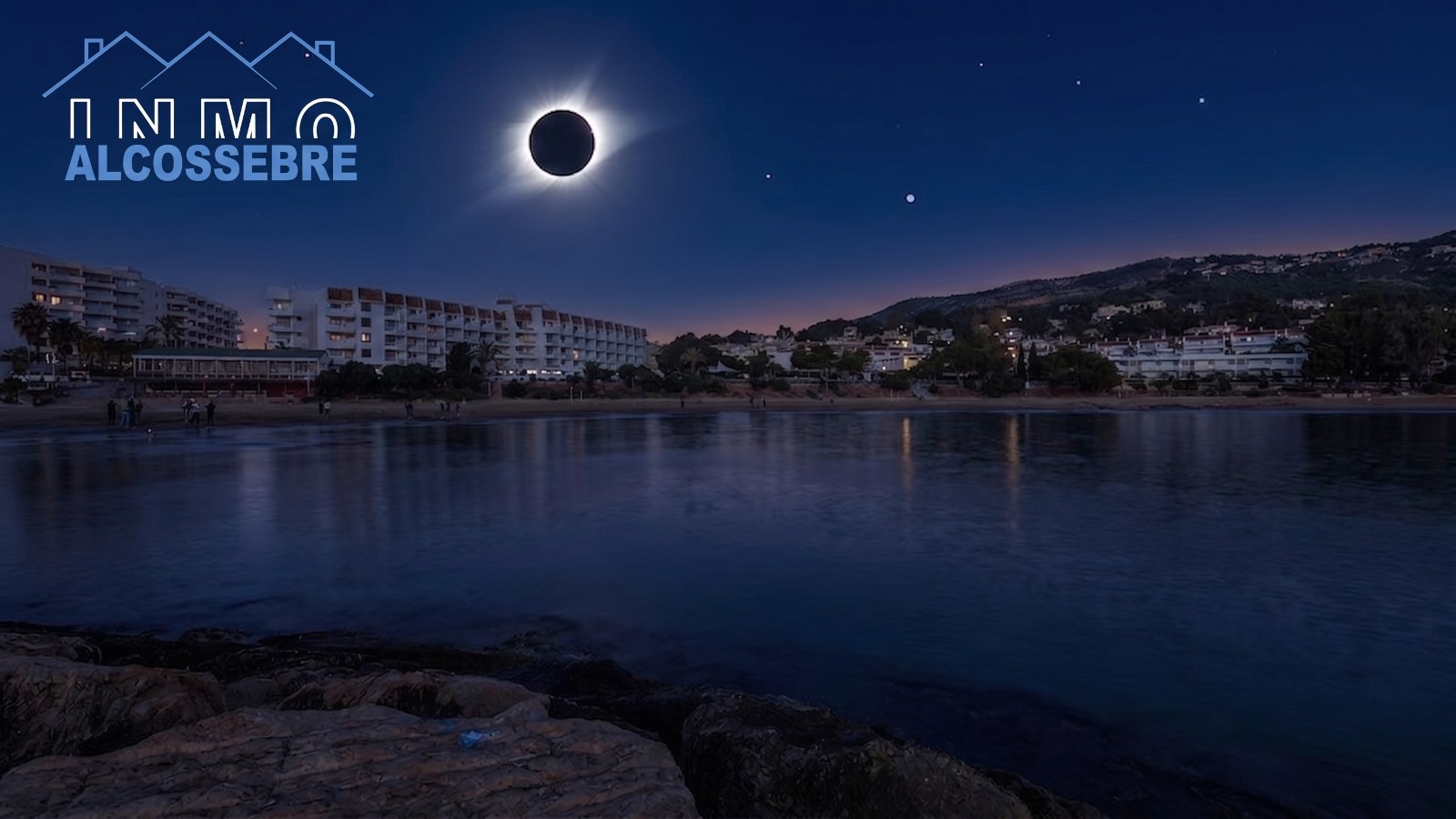
The universe is preparing to gift us one of the most impressive and overwhelming visual spectacles of our era. Spain will very soon become the world epicenter of astronomy with the arrival of a historic total solar eclipse. In the province of Castellón, and very especially along the coast of Alcossebre, we are immensely fortunate to find ourselves right in the path of totality. This means that the Moon will completely cover the solar disk, gifting us a few minutes of absolute darkness in broad daylight and allowing us to contemplate the majestic solar corona with the naked eye.
If you want to enjoy this once-in-a-lifetime astronomical phenomenon in an unparalleled setting, the beaches of Alcossebre and its protected natural areas are shaping up to be the best natural viewpoints in the entire country. Get ready to discover why our region is the ultimate destination for lovers of nature’s greatest shows.
What is a total solar eclipse and why is this event historic?
A total solar eclipse occurs when the Moon perfectly aligns between the Earth and the Sun, casting its shadow onto our planet. Unlike partial or annular eclipses, during totality, daylight disappears completely, temperatures drop noticeably within minutes, and animals, confused by the sudden nightfall, begin their nighttime rituals. It is a sensory experience that goes far beyond the purely visual.
The importance of this event is extraordinary: it has been decades since mainland Spain witnessed a total solar eclipse, which will attract scientists, astrophotographers, and eclipse chasers from every corner of the planet. For precise technical details, exact timings of the umbra, and path maps, you can consult the official astronomy section of the National Geographic Institute (IGN), the reference institution responsible for monitoring these phenomena in our country.
Why Alcossebre is the ideal place for astronomical observation
To fully enjoy a total solar eclipse or a night of stargazing, three fundamental ingredients are needed: a clear horizon (especially to the west/northwest, where the Sun will set), clean skies, and as little light pollution as possible. Fortunately, the Costa Azahar more than meets these requirements.
While in large metropolitan areas pollution and tall buildings will obstruct the visibility of the horizon, the wide open spaces of our coastline guarantee a clean, perfect panorama of the sky. Furthermore, experiencing this event with the Mediterranean Sea as a backdrop and surrounded by native vegetation adds a magic and mystique that very few destinations in the world can replicate. You can follow safety recommendations to protect your eyes during observation in NASA’s official guides on solar eclipses, making sure to always use approved filters and glasses from start to finish.
The best observation points in Alcossebre and the surrounding area
If you are looking for the perfect spot to set up your tripod or simply sit with your family and enjoy the moment, note down these key locations in the area:
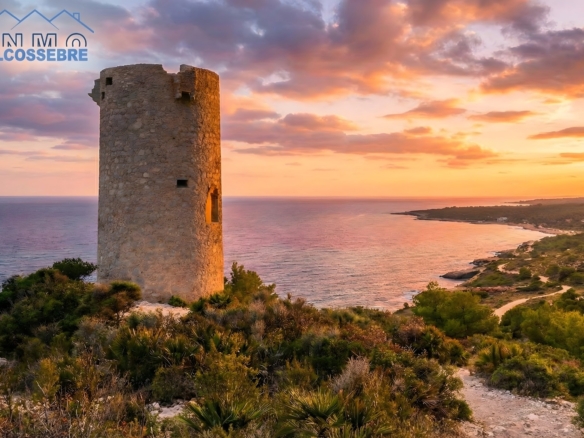
The cliffs of the Sierra de Irta: Climbing to the high points of this natural park, near the traditional watchtowers, will offer you an aerial perspective of the sea and the sky. It is the ideal place to clearly see how the giant shadow of the Moon advances thousands of kilometers per hour over the surface of the water.
Prat de Cabanes-Torreblanca: The plains of this beautiful protected wetland offer a completely clean horizon towards the coast. It is an idyllic setting to experience the drastic change in light surrounded by the silence of nature and local wildlife.
The coves and beaches of Alcossebre: Enjoying the eclipse directly from the fine sand of iconic beaches such as Playa de las Fuentes, La Romana, or El Carregador is an extremely comfortable, accessible, and spectacular option to experience the phenomenon with the family.